

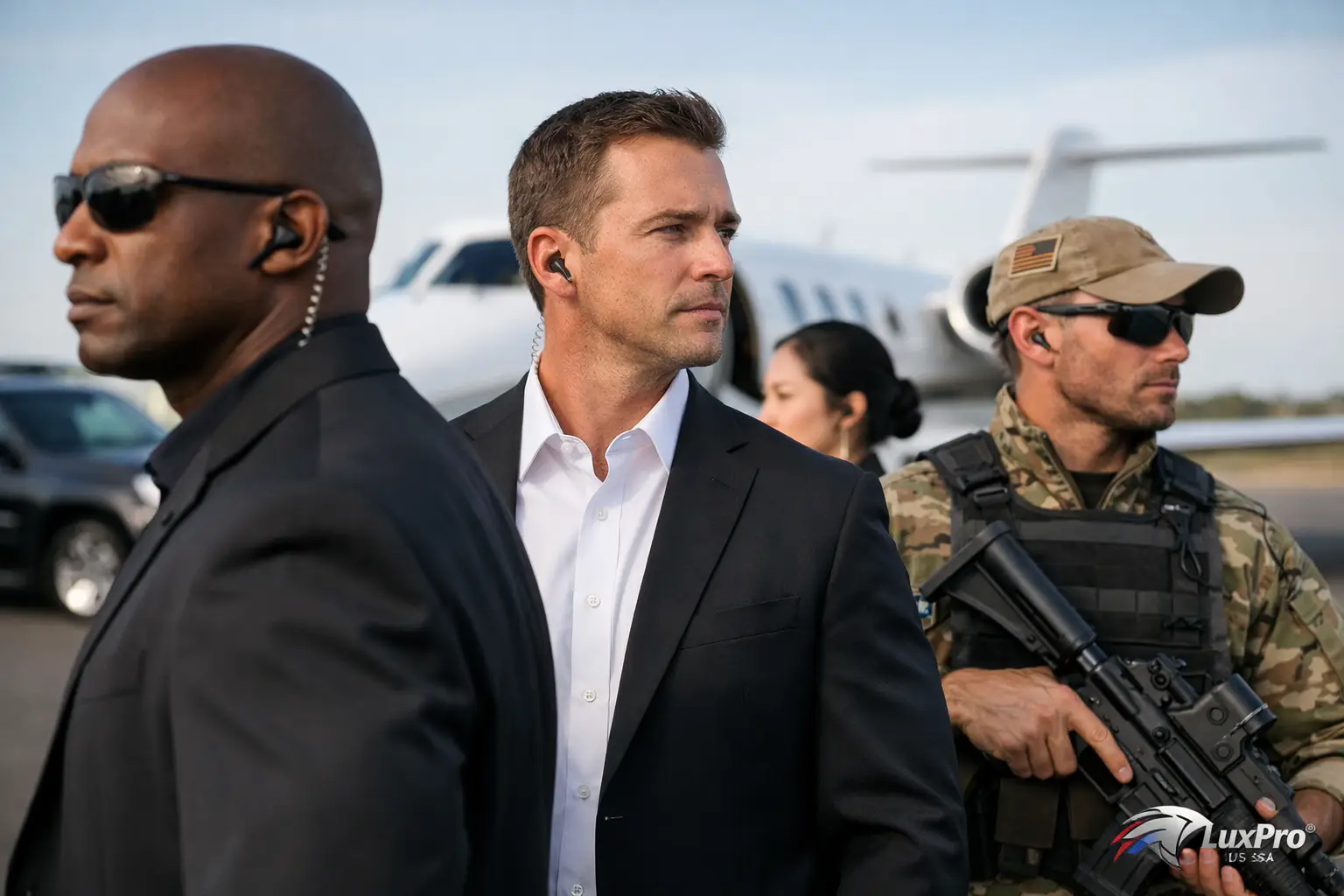
A principal can leave Los Angeles after a board meeting, land in London before dawn, and arrive at a private residence without a single visible disruption. That outcome is not created by placing a security professional beside the client at each stop. Multi-national security details require one protective standard, informed local execution, and disciplined coordination across every border, itinerary change, and handoff.
For executives, families, entertainment professionals, and estate owners, international protection is ultimately a continuity service. Privacy, movement, communications, accommodations, vehicles, and personnel must work together without turning the client’s schedule into a security exercise. The best details feel composed and unobtrusive, even when the planning behind them is extensive.
What Multi-National Security Details Actually Require
A multi-national assignment is not simply domestic executive protection repeated in several countries. Each destination brings different legal frameworks, local customs, transportation conditions, emergency resources, and expectations around protective personnel. A plan that works well in Southern California may be impractical, overly visible, or noncompliant elsewhere.
The central question is not, “How many agents are needed?” It is, “What level of protection allows this client to move with confidence while preserving their time, comfort, and privacy?” The answer depends on the traveler’s profile, public visibility, itinerary, assets, family considerations, and the local environment.
A thoughtful protective program starts with advance planning. This includes a clear understanding of arrival and departure procedures, residential or hotel considerations, meeting locations, ground transportation, medical contingencies, and communications protocols. It also means identifying who has authority to adjust the plan when flights shift, a venue changes, or the principal requests an unplanned stop.
Consistency matters. The principal should not have to repeat preferences, sensitivities, or household protocols to a new team in every market. A lead coordinator and documented operating plan preserve continuity while allowing local specialists to contribute their on-the-ground knowledge.
One Standard, Local Expertise
The strongest international details combine a trusted lead team with properly vetted local resources. The lead team understands the principal’s expectations, working style, privacy requirements, and established procedures. Local personnel understand the practical realities that cannot be learned from an itinerary alone.
That local knowledge can shape decisions about airport access, event arrivals, hotel entrances, travel timing, driver selection, cultural etiquette, and nearby medical support. It can also prevent a common mistake in high-end travel: treating every city as though the same protective footprint is appropriate.
There is a trade-off. Bringing a full team from the United States can provide familiarity and a consistent client experience, but it may add cost, travel complexity, and limitations depending on local regulations. Relying entirely on local providers can be efficient, yet it may create gaps in communication or service standards if the partners have not been carefully qualified.
A balanced model is often best. A principal-facing lead or advance coordinator can maintain the protective standard, while approved local personnel, drivers, and specialists support the assignment where they are most effective. This structure is particularly valuable for multi-city executive travel, international productions, private events, and families moving between residences.
Vetting Cannot Be Delegated Casually
International capability is only as strong as the people and partners behind it. Credentials, professional history, discretion, language capability, local licensing requirements, references, and operational judgment all deserve review. For a high-profile client, the risk is not limited to physical security. Loose conversation, poor communication discipline, or an unreliable driver can compromise privacy just as quickly.
The goal is not to build the largest possible team. It is to build a team that is appropriately sized, credentialed, calm under pressure, and compatible with the client’s expectations. A family traveling privately may value a low-profile protective driver and a close protection professional who is comfortable around children. A corporate delegation may need a larger coordination structure around venues, schedules, and executive arrivals.
Security and Luxury Travel Must Be Coordinated
Protection often breaks down at the points where separate vendors meet. The aircraft lands, but the ground transportation provider has not been briefed. The hotel knows a VIP is arriving, but not which entrance has been selected. A family’s luggage, personal staff, and vehicles are moving on separate timelines. Every disconnected handoff creates unnecessary exposure and inconvenience.
That is why security should be planned alongside transportation and concierge logistics, not added at the end. Chauffeured vehicles should be selected for suitability, reliability, privacy, and route flexibility. Aviation and yacht movements require carefully coordinated arrivals, transfers, manifests, and contingency planning. Hotel, residence, restaurant, and event arrangements should be evaluated through the lens of both hospitality and practical access.
LuxPro® USA approaches this coordination as a white-glove service responsibility. When secure transportation, executive protection, and travel support are managed through a unified point of contact, clients spend less time reconciling competing schedules and more time focused on the purpose of their travel.
This does not mean every itinerary needs an overt security posture. For some clients, a discreet driver-led solution and well-planned movement are appropriate. For others, visible protective coverage is a necessary reassurance at public appearances, high-value transactions, contentious business matters, or travel involving elevated personal exposure. The appropriate level of presence should follow the risk, not the ego of the provider.
The Advance Work Clients Rarely See
Exceptional protection is usually decided before the principal reaches the destination. Advance work creates the conditions for an effortless experience without advertising security arrangements to everyone involved.
A well-prepared detail reviews the full travel rhythm, not just individual locations. That includes flight timing, transfer windows, anticipated traffic patterns, vehicle staging, venue access, secure waiting areas, guest movements, and the client’s preferred pace. For executives, even a short transition between an airport, a meeting, and a hotel can affect confidentiality, punctuality, and energy.
Plans also need room for reality. Private travel is dynamic. A meeting runs long. A child becomes ill. Weather affects aviation. A public event adds unexpected attention. The best teams do not respond with visible frustration or a rigid insistence on the original plan. They offer clear options, make informed adjustments, and keep the principal protected without making the moment feel dramatic.
Communication Is a Protective Asset
The right information should reach the right people at the right time, and no more. This principle protects privacy while allowing drivers, security professionals, household staff, executive assistants, and event contacts to perform their roles.
A designated client representative is often essential, especially for family offices and corporate teams. That person should know whom to contact around the clock, how itinerary changes are approved, and what information requires restricted handling. Clear communication reduces confusion, duplicate instructions, and the temptation to share sensitive details through informal channels.
For the principal, communication should be concise. They need confidence that the team is prepared, not a stream of operational commentary. A brief arrival confirmation, a clear option when plans change, and a discreet report after a significant incident are often more valuable than constant updates.
Choosing the Right Protective Partner
When selecting support for international movement, clients should look beyond broad claims of global coverage. Ask how personnel and local partners are vetted, who leads the assignment, how transportation is coordinated, and what happens when plans change outside standard business hours. A provider should be able to explain its process without disclosing sensitive operating details.
Experience across luxury hospitality is equally valuable. Protection that disregards the client experience can become another source of stress. The right partner understands that a delayed vehicle, an awkward hotel arrival, or an exposed conversation in a public lobby can undermine the very discretion the detail was hired to preserve.
For clients traveling from Thousand Oaks, Los Angeles, or other major U.S. markets to destinations such as New York, London, or the San Francisco Bay Area, the objective remains the same: a controlled, personalized experience from departure through return. The itinerary may be international, but the standard of care should feel familiar at every stop.
The most effective multi-national security details do not make travel feel restricted. They create the quiet confidence to move freely, meet privately, and arrive prepared, knowing that the people, vehicles, and decisions behind the experience have been coordinated with care.