

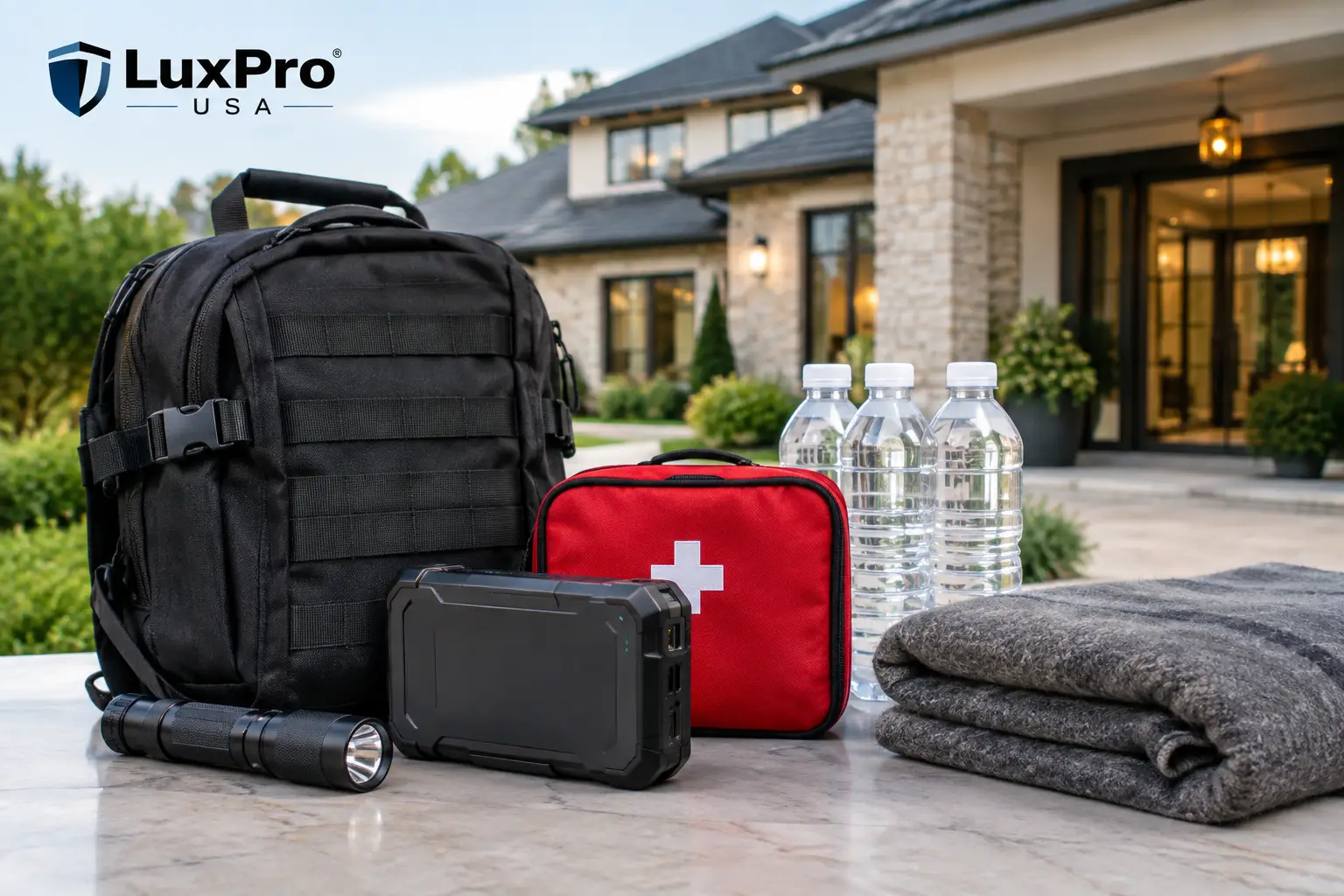
A gated entrance, sophisticated surveillance, and a well-appointed residence can create a sense of control. During a fast-moving wildfire, extended power outage, medical crisis, or security concern, however, the critical question is not how impressive the estate is. It is whether everyone knows exactly what happens next. Estate emergency preparedness gives principals, family members, household staff, and security teams a private operating plan when time and information are limited.
For high-net-worth households, preparedness is not about keeping a few supplies in a closet. It is a coordinated protection strategy that accounts for people, property, privacy, transportation, communications, and continuity. The right plan should feel calm and nearly invisible in ordinary life, then become immediately actionable when circumstances change.
Estate Emergency Preparedness Starts With the Real Risks
A generic emergency checklist is rarely enough for a private estate. The risk profile of a Malibu residence differs from that of a second home in the mountains, an executive property in Calabasas, or a waterfront residence with private dock access. Wildfire exposure, mudslides, earthquakes, civil disruption, utility failures, medical needs, and targeted privacy concerns all require different decisions.
Begin with a confidential assessment of the property and the household’s lifestyle. Consider who is present at the estate at different times, including children, guests, caregivers, domestic staff, contractors, and pets. Review the number of access points, the reliability of cellular service, the location of utilities, available evacuation routes, and the distance to medical care or a secure alternate location.
This assessment should also identify dependencies that can become vulnerabilities. A residence with automated gates, smart locks, cameras, climate controls, and backup systems may be highly capable, but only if those systems are maintained and there is a manual fallback. Technology supports preparedness. It should never be the entire plan.
Build a Private Command Structure
An emergency plan fails when multiple people assume someone else is handling the decision. A polished estate operation assigns authority in advance, with clear boundaries around who can make decisions if the principal is unavailable.
The household should know who initiates the plan, who contacts emergency services, who accounts for family members and staff, who communicates with the security detail, and who coordinates transportation. For some households, an estate manager leads the on-site response while an executive assistant handles travel changes, family communications, and off-site logistics. For others, a designated security professional is the appropriate incident lead.
Privacy matters here. Not every staff member needs every detail. Use a need-to-know structure, particularly for secure relocation sites, medical information, access codes, travel arrangements, and principal schedules. Keep a protected contact directory in more than one format, including a secure printed version. A dead phone battery or inaccessible password manager should not bring coordination to a halt.
Establish communication tiers
A single group message can create confusion, expose sensitive details, or fail when networks are congested. A better approach separates communications by urgency and responsibility.
The first tier is the immediate life-safety alert for those on the estate. The second is the operational channel for the estate manager, security team, transportation coordinator, and principal’s office. The third is a controlled update process for family members, advisers, and other parties who need information but are not making real-time decisions.
Agree on plain-language instructions before an incident occurs. A message such as “depart now using Route B” is far more useful than a vague request to “be careful.” The plan should also establish who is authorized to speak publicly, if any response is required. Discretion is often as valuable as speed.
Secure the Estate Without Delaying Departure
During an evacuation or urgent departure, people come first. Yet an estate cannot simply be left in an uncertain state. The goal is a fast, orderly departure sequence that protects the residence without asking staff to take unnecessary risks.
Create a property shutdown protocol tailored to the estate. It may include closing fire doors and shutters, securing sensitive documents and valuables, confirming that gates are functioning as intended, shutting off selected utilities when appropriate, and verifying that surveillance and backup power are active. In wildfire-prone areas, exterior preparation may involve moving combustible furnishings, clearing vulnerable zones, and ensuring that pumps or water systems are ready where applicable.
The trade-off is time. A detailed shutdown procedure is useful only if it can be completed safely within the available window. Separate tasks into three categories: actions that must happen immediately, actions to take only if time permits, and actions that should never delay evacuation. Assign owners for each task and rehearse the sequence with trusted staff.
Plan Transportation as a Protective Service
A family may have several vehicles on site and still lack an evacuation strategy. Keys may be unavailable, roads may be blocked, drivers may be off duty, and family members may leave separately without a designated reunification point. Estate emergency preparedness should account for movement well before movement becomes urgent.
Establish primary and alternate vehicles, primary and alternate drivers, and more than one route away from the property. For principals who require heightened privacy or executive protection, consider how vehicle selection, discreet staging, security accompaniment, and destination confirmation will be handled. A secure relocation plan should include more than a hotel reservation. It should address arrival procedures, access control, meals, medications, staff accommodation, and the ability to continue business or family obligations privately.
Air travel, private aviation, and other specialty arrangements can be valuable during a regional disruption, but they are not guaranteed solutions. Weather, airport conditions, road access, airspace restrictions, and crew availability can change quickly. Ground transportation and a nearby secure destination remain essential parts of the plan.
LuxPro® USA coordinates white-glove transportation, estate support, and security-focused logistics so clients can consolidate critical moving parts through one trusted concierge partner when the situation calls for it.
Protect Health, Records, and Daily Continuity
The most visible emergency concerns are often physical, but the less visible details can create the longest disruption. Essential medications, medical devices, dietary requirements, mobility needs, pet care, passports, insurance information, and access to funds should be planned with the same precision as evacuation routes.
Keep a discreet, regularly reviewed continuity kit at the estate and, where appropriate, in designated vehicles. It should contain essentials specific to the household rather than a one-size-fits-all collection of supplies. A family with young children, an elderly parent, or a principal who travels internationally will have different requirements.
Sensitive records deserve special attention. Maintain encrypted digital copies and protected physical copies of key documents, including insurance contacts, property records, medical directives, identification, and essential account information. The objective is not to carry every record during an evacuation. It is to ensure that the right people can access the right information without exposing the household to unnecessary risk.
Practice Without Creating Drama
A plan that has never been tested is an assumption. The best estate teams run discreet, practical exercises at least once or twice a year, and whenever there is a major change in staffing, property configuration, family needs, or local risk conditions.
A rehearsal can be straightforward: test the communication tree, time the departure sequence, confirm that staff know their responsibilities, and drive an alternate route. Review what happened afterward. Did a gate delay the vehicle? Was an essential contact missing? Did someone have access to a key piece of information that they did not need? Small corrections made in calm conditions can prevent serious complications later.
Avoid turning practice into a theatrical security exercise. The objective is confidence, not anxiety. Children and guests should receive age-appropriate instructions, while staff should understand that a professional plan protects them as well as the principals.
Keep the Plan Current
Emergency readiness is not a document to complete once and file away. It changes with seasonal conditions, staffing, travel schedules, construction projects, new technology, health needs, and evolving threats. Estates in Southern California may require a heightened wildfire review before peak fire season, while coastal properties may need separate preparations for severe weather or access disruptions.
Schedule a private review on a set cadence. Confirm contact numbers, vehicle readiness, medical supplies, insurance details, backup power maintenance, vendor availability, and relocation arrangements. When a household acquires a new residence or welcomes new staff, update the plan immediately rather than waiting for the next annual review.
The finest emergency plan does not make a crisis feel luxurious. It does something more valuable: it preserves calm, privacy, and decisive control when the household needs them most.