

A flawless guest list means very little if the room itself feels exposed. For private hosts, corporate planners, and executive teams, event security is not a background detail. It is part of the guest experience, part of the brand impression, and often the difference between a polished evening and a preventable problem.
At the luxury level, security is rarely about visible force. It is about control, discretion, timing, and calm execution. The best plans protect without disturbing the atmosphere. Guests should feel welcomed, not processed. Principals should feel protected, not surrounded. That balance is what separates basic coverage from a truly elevated security operation.
What event security really covers
Many people hear the term and picture one or two guards at a door. That may be enough for a small, low-risk gathering, but not for a fundraiser with recognizable attendees, a corporate event with executive movement, or a private celebration at a residence or estate.
Event security includes access control, credential checks, perimeter awareness, arrival and departure coordination, vendor screening, incident response planning, and communication among teams on the ground. In some cases, it also includes route planning, secure transportation staging, close protection for select guests, and coordination with household staff or venue management.
The real value is not only in responding to a problem. It is in reducing the chance that a problem develops in the first place. When guest entry is organized, vehicles are staged properly, and staff know who belongs where, risk drops quickly.
Why high-end events need a different standard
A public festival and a private estate dinner do not require the same playbook. Neither does a board-level corporate retreat and a celebrity-attended launch party. The setting, guest profile, media sensitivity, and privacy expectations all change the assignment.
High-end events usually carry more than crowd concerns. They involve reputation, confidential conversations, luxury assets, family privacy, executive schedules, and guests who expect a refined environment. A loud or poorly briefed security presence can undermine the very event it is supposed to protect.
That is why the best security teams operate with hospitality awareness. They understand pacing. They know when to be visible and when to stay in the background. They can coordinate with chauffeurs, assistants, planners, and venue staff without creating friction.
In markets such as Los Angeles, Malibu, Newport Beach, and other high-visibility destinations, this matters even more. Events often involve layered arrivals, limited parking access, public curiosity, paparazzi interest, or neighborhood scrutiny. A luxury event may look relaxed on the surface, but behind that ease should be disciplined planning.
The first question is not headcount – it is risk
One of the most common mistakes in event planning is asking, “How many security personnel do we need?” before asking, “What are we actually protecting against?” Headcount only makes sense after the event has been assessed.
Risk depends on several factors. Guest profile is one. A private birthday dinner for a family office principal has different exposure than a product launch with influencers and press. Venue type is another. A private home, hotel ballroom, waterfront property, and production set each present different access points and vulnerabilities.
Timing also matters. Evening events with alcohol service require different planning than daytime business gatherings. Multi-location itineraries increase complexity. So do last-minute guest additions, publicized appearances, valuable jewelry, gift displays, and any event where confidential business or personal matters may be discussed.
Strong event security starts with asking practical questions early. Who is attending? Who is expected to arrive unannounced? Which entrances will be active? Are there children or family members present? Will there be media, gifts, protest risk, or high-value property on site? Is the principal arriving privately or making a visible entrance?
The answers shape everything that follows.
Event security planning that works
The strongest plans are built well before the first vehicle arrives. A proper advance usually includes a site review, route mapping, guest flow analysis, staffing assignments, emergency contacts, and a communication structure that everyone understands.
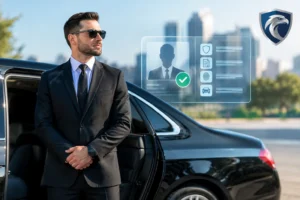
Access control is often the first pressure point. It should be clear who is checking names, how credentials are handled, where vehicles are staged, and what happens if an uninvited person appears. At luxury events, this process needs polish. Nobody wants a valued guest waiting in confusion at the gate because the list is disorganized.
Perimeter control matters just as much as front-door coverage. Some venues look private but are easy to approach from the side, rear, service entrance, dock, or valet area. Residential properties can be especially deceptive. Beautiful grounds, open layouts, and multiple entry points create an elegant setting, but they also create opportunity for unwanted access if the perimeter is not monitored intelligently.
Communication is another dividing line between average and excellent service. Security should not operate in a silo. The team needs alignment with event planners, drivers, assistants, household staff, and venue contacts. If an executive’s arrival time changes, transportation and protection teams should know immediately. If a guest becomes disruptive, there should be a quiet plan for handling it without drama.
The guest experience still comes first
Security that feels aggressive can damage an event just as quickly as weak coverage. For luxury clients, the goal is to preserve comfort while maintaining control.
That means personnel should be polished, well-briefed, and emotionally steady. They should know how to greet, guide, de-escalate, and observe. A guest asking for directions should not feel brushed off. A family member should not be challenged in a way that causes embarrassment. A high-profile attendee should be moved efficiently without creating a scene.
This is where white-glove service and protection meet. The best operations are quiet, precise, and respectful. They support the tone of the event instead of competing with it.
In practice, that may mean using plainclothes personnel for certain environments, increasing visible presence only where needed, or coordinating arrivals so VIP guests move from vehicle to venue with privacy and ease. It may also mean assigning security personnel who understand both executive protection and hospitality etiquette.
Transportation and security should never be separate conversations
A surprising number of event issues happen before guests ever reach the venue. Delayed arrivals, exposed pickup points, poor lighting, confused driver coordination, and unmanaged curbside traffic can all create unnecessary risk.
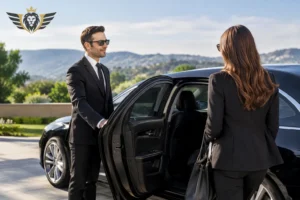
For executive events and private gatherings, transportation planning should be integrated into the event security strategy. That includes secure arrival sequencing, valet oversight when appropriate, driver communication, alternate exit options, and awareness around who is traveling with whom. If principals or VIP guests require privacy, route discretion and controlled pickup locations become just as important as venue staffing.
This is one reason sophisticated clients prefer consolidated coordination. When transportation, concierge logistics, and security planning are aligned, the event runs more cleanly. Fewer handoffs mean fewer mistakes.
Not every event needs the same level of protection
There is a tendency to assume more security is always better. Not necessarily. Overstaffing can feel intrusive, especially at intimate private events. Understaffing, of course, creates obvious exposure. The right approach depends on the event’s profile, atmosphere, and operational demands.
A quiet anniversary dinner at a private residence may need discreet perimeter monitoring and controlled arrivals, but not a highly visible floor presence. A corporate leadership summit may prioritize executive movement, credential control, and confidentiality. A large social event with entertainment, alcohol service, and guest overflow may require stronger entry management and active response capability.
The point is to fit the plan to the occasion. Good security is tailored. Great security feels almost invisible.
Choosing an event security partner
Experience matters, but relevant experience matters more. A team that understands nightlife doors is not automatically the right fit for a family estate event or a C-suite offsite. The ideal partner knows how to work in private environments, coordinate with luxury transportation and household operations, and maintain a high standard of discretion.
Ask how the team handles advance work, communications, guest screening, and contingency planning. Ask who supervises on site. Ask whether the personnel are accustomed to executive, family, or celebrity-facing environments. Professional presence counts. So does judgment.
For clients who need an integrated model, a provider with both concierge depth and protective capabilities offers a clear advantage. LuxPro USA serves this space by combining executive transportation, event coordination, and professional security support under one trusted umbrella, which can simplify planning for clients who expect precision at every level.
Event security is ultimately about preserving control without sacrificing elegance. When it is done properly, guests feel at ease, principals stay protected, and the event unfolds exactly as it should – private when it needs to be, welcoming when it matters, and prepared for what others failed to anticipate.
The most memorable events are not only beautiful. They are calm, controlled, and confidently managed from the first arrival to the final departure.