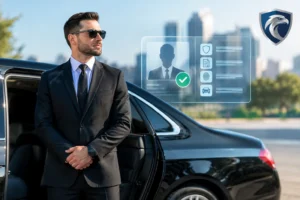


A secure arrival is no longer defined by a guard at the door or a vehicle waiting at the curb. The future of private security is a coordinated protection experience built around the way VIP clients actually live, travel, work, and host. For executives, estate owners, public-facing professionals, and high-net-worth families, protection must be visible when deterrence matters and nearly invisible when privacy is the priority.
That shift changes what clients should expect from a security partner. The strongest programs do not merely react to an incident. They anticipate pressure points, protect the client’s time, and bring together people, planning, transportation, and technology with exceptional discretion.
The Future of Private Security Is Integrated
Private security is moving away from stand-alone assignments and toward integrated protective operations. An executive traveling from Los Angeles to New York may need more than a close protection professional. The itinerary can involve a secure airport transfer, vetted chauffeur, advance route planning, hotel coordination, meeting-site awareness, and real-time communication among the people responsible for the principal’s movement.
This approach is especially valuable because risk rarely appears in one neat category. A travel delay can create an unplanned exposure. A private event can draw unwanted attention. A residence may require stronger access control while a family is away, then a softer, hospitality-minded presence during a weekend gathering. Coordination is what keeps individual services from becoming disconnected handoffs.
For clients who value white-glove service, the goal is not to make every movement feel heavily guarded. It is to make each movement feel considered. A well-run security detail supports the schedule, respects the household or executive team, and preserves the sense of comfort expected in a premium environment.
Technology Will Improve Awareness, Not Replace Judgment
Advanced technology is becoming a meaningful part of executive and estate protection. Intelligent camera systems can identify unusual activity, access-control platforms can record and manage visitor entry, and location-aware communications can help teams respond faster when plans change. Threat monitoring tools may also identify public signals that call for a closer review before a major appearance, event, or trip.
The appeal is clear: better information, delivered sooner. Yet technology has limits. A camera can flag movement at a perimeter, but it cannot assess the tone of a sensitive interaction with a guest. An automated alert can identify a pattern, but it cannot replace an experienced professional’s judgment about whether that pattern presents a true concern.
The right model is human-led and technology-enabled. Trained security professionals should use systems to gain context, verify concerns, and make measured decisions. This reduces unnecessary disruption while ensuring genuine issues receive immediate attention.
Privacy is also part of the equation. High-profile households and corporate leaders should ask how surveillance footage, access records, travel details, and communications are stored and who can see them. More data may provide better visibility, but poorly handled data creates its own vulnerability. Discretion must be designed into the security operation, not treated as an afterthought.
Estate Security Will Become More Personal
Estates are increasingly managed as living environments rather than fixed assets. A home may be the setting for family life, remote work, staff operations, deliveries, contractors, social occasions, and seasonal travel. That requires a security presence capable of adapting to the household’s rhythms without creating friction.
Future-focused estate security combines physical presence with thoughtful procedures. This may include discreet gate and visitor protocols, property patrols, alarm response coordination, vendor screening, package management, and clear emergency procedures for household staff. In some residences, technology such as perimeter sensors and integrated cameras adds a valuable layer. In others, a lower-profile approach is better suited to the property and the client’s lifestyle.
The decision depends on location, profile, occupancy patterns, and personal preference. A sprawling estate with frequent staff and service traffic has different needs from a pied-a-terre used only during business trips. A public figure may need heightened arrival and departure planning, while a corporate executive may place greater emphasis on information security and family privacy.
The common standard is professionalism. Estate personnel should understand that they are working in a private home, not simply staffing a post. Courtesy, confidentiality, and clear communication are just as essential as vigilance.
Travel Protection Will Be Planned Door to Door
For VIP clients, travel security is becoming more precise and more fluid. The traditional concept of protection beginning at the airport is giving way to door-to-door planning, from the moment a client leaves a residence or office through final arrival at a destination.
This does not mean every trip requires an overt protective detail. The level of support should match the itinerary and current circumstances. A routine executive transfer may call for a vetted chauffeur, carefully selected vehicle, and active itinerary monitoring. An international trip, sensitive meeting, or high-visibility appearance may require advance work, close protection, alternate routes, and coordinated local support.
The most effective arrangements do not force clients to manage separate providers for transportation and security. When the chauffeur team, concierge coordination, and protection professionals operate from the same plan, the experience becomes more controlled and considerably more comfortable. Changes can be handled quickly without exposing personal schedules to unnecessary parties.
For LuxPro® USA clients, that coordinated model reflects the purpose of a true VIP concierge relationship: one trusted team focused on movement, protection, and service standards rather than a collection of disconnected vendors.
The Professional Standard Is Rising
As expectations rise, credentials alone will not define quality. The next generation of private security professionals needs strong protective training, but also situational awareness, communication skills, cultural fluency, and sound hospitality instincts. A security professional may be working alongside executive assistants, family office staff, household managers, event planners, chauffeurs, and corporate travel teams. The ability to coordinate respectfully is a security asset.
Screening will matter more than ever. Clients should expect providers to vet personnel carefully, confirm relevant experience, and maintain clear standards for confidentiality. A polished appearance and calm manner are valuable, but reliability under pressure is what earns trust over time.
There is also a growing need for professionals who can work without escalating the atmosphere. A good detail can set a boundary, redirect an unwanted interaction, or adjust movement plans without turning a minor concern into a scene. For many high-profile clients, that restraint is the difference between feeling protected and feeling managed.
Intelligence Will Matter Before an Incident Occurs
The strongest private security programs will place greater emphasis on advance awareness. This includes reviewing travel environments, event logistics, public exposure, local conditions, and any information that may affect a principal or household. It is not about creating anxiety around every possible threat. It is about making informed decisions before a small issue becomes an interruption.
For example, a corporate gathering may benefit from an advance review of entrances, guest flow, parking, and departure timing. A family vacation may require local coordination and a plan for handling unexpected changes. A residence undergoing construction may need updated vendor access procedures as the property’s daily activity increases.
This kind of preparation should remain proportionate. Overplanning a low-risk itinerary can waste resources and interfere with the client’s experience. Underplanning a complex itinerary can leave a team improvising at the wrong moment. The value of an experienced security partner is knowing the difference.
Security Will Be Measured by Continuity and Confidence
The future of private security is not about more cameras, more vehicles, or a larger visible footprint. It is about better continuity. A client should not have to repeat preferences, explain sensitive details, or wonder whether the next provider understands the larger plan.
That continuity creates confidence. The right security program protects the principal while respecting family life, business priorities, and the standards of an exceptional lifestyle. It enables a client to arrive prepared, host comfortably, travel with greater assurance, and focus attention where it belongs.
When selecting private security support, look beyond the presence of personnel or equipment. Choose a partner with disciplined screening, proven judgment, hospitality awareness, and the ability to coordinate every moving part with discretion. The finest protection is often the kind that clients scarcely notice, because everything around them is already being handled.