

A VIP guest does not remember your run-of-show. They remember whether the airport pickup felt controlled, whether security was visible without being intrusive, and whether every transition happened without friction. That is why a vip event logistics case study matters. It reveals what actually keeps a high-profile event on track when the stakes include reputation, privacy, timing, and safety.
This example reflects the kind of coordination required for an executive-level private event with celebrity attendance, investor guests, and family principals moving between multiple locations over a single day. The point is not spectacle. The point is control. In premium event environments, logistics is not a back-office function. It is the guest experience.
The VIP event logistics case study setup
The event involved a private waterfront reception, a pre-event airport arrival window for key guests, an off-site executive dinner, and late-night departures back to hotels, residences, and private aviation terminals. Attendance was intentionally limited, but the complexity was not. The guest list included C-suite attendees, public-facing talent, a principal family, and several individuals with heightened privacy expectations.
At first glance, the requirements looked familiar: luxury transportation, on-site coordination, guest communications, and security support. In practice, the challenge came from overlap. Arrivals were staggered, venues had different access constraints, and several guests needed personalized movement plans that could not appear obvious to the wider group.
That is where premium logistics differs from standard event transportation. You are not simply assigning vehicles. You are managing exposure, timing, service standards, and contingencies in a way that protects the event from becoming visibly complicated.
What made this event high-risk
The risk profile came from three factors. First, timing was compressed. Several key guests arrived within a narrow window, while the reception start time could not shift. Second, the privacy requirement was real. A few attendees were known figures, and one family office requested minimal public visibility at every touchpoint. Third, there were competing service priorities. Some guests expected social warmth and visible hospitality, while others valued quiet, speed, and discretion above all else.
Those priorities are not contradictory, but they do require a carefully layered plan. If every guest receives the exact same handling, the experience often feels either too stiff or too exposed. White-glove service is personal by design.
Planning the movement, not just the event
The most effective logistics plans begin by mapping movement before amenities. In this case, transportation, security, and concierge support were built around guest pathways rather than the event timeline alone. That meant breaking the day into operational zones: airport arrivals, hotel and residence staging, venue access, private dining transfers, and departure management.
Each zone had a lead contact, a communication protocol, and an escalation path. That structure matters because problems rarely begin at the ballroom door. They begin when a flight lands early, a guest changes wardrobe plans, a credentialed vendor blocks a service entrance, or a principal requests a route change with ten minutes’ notice.
A polished itinerary is useful. A command structure is what saves the day.
Transportation strategy
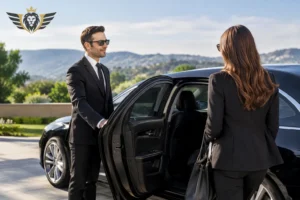
Vehicle selection was based on role, not status labels. Executive SUVs were assigned for principal movement and security-compatible transfers. Luxury sedans handled lower-visibility guest pickups. A larger vehicle remained on standby for support staff and last-minute asset movement, avoiding the common mistake of using guest vehicles for operational needs.
Routing was also layered. Public-facing arrivals used the most elegant access points. Private principals used controlled approaches with limited dwell time. For late-night departures, dispatch sequencing was built around actual guest readiness rather than announced departure times. That sounds simple, but it prevents chauffeurs from clustering at a venue entrance and drawing attention.
The trade-off is cost. A plan like this requires more standby capacity than a standard event budget typically allows. But for a VIP environment, spare capacity is not waste. It is protection against visible disruption.
Security without friction
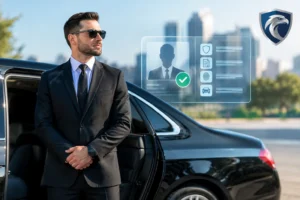
Security was present throughout the event, but not in a theatrical way. Advance work focused on access control, route review, driver screening, venue coordination, and protection of private arrival information. On-site personnel blended into the service environment while maintaining clear lines around principal movement.
This balance is where many events either overreach or underperform. Heavy security can make invited guests feel scrutinized. Light security can expose the client to unnecessary risk. The right posture depends on profile, venue layout, and the behavior expected from media, public traffic, or uninvited observers.
For this event, the most valuable security decision was not adding more bodies. It was limiting who had sensitive information. Vehicle assignments, exact arrival times, and private holding locations were shared only with staff who truly needed them.
Guest experience was treated as an operations metric
Luxury service is often discussed as atmosphere, but at the highest level it is also logistics discipline. Guests should never feel the machinery behind the experience. In this case, concierge support was embedded into the schedule to absorb small but important requests before they became operational delays.
One guest needed a revised transfer after an itinerary change at the airport. Another required a quiet holding location before entering the reception. A family member requested a last-minute retail pickup through a personal assistant. None of these changes were dramatic on their own. Together, they could have disrupted the flow if handled through fragmented vendors.
A single coordination framework prevented that. Transportation, concierge, and protective oversight were managed as related functions rather than separate services. This is where a one-source model has a clear advantage. It reduces handoff errors, duplicate communication, and the awkward gaps that guests notice immediately.
Communications that stayed invisible
The event team used a tight communication loop with need-to-know updates, live dispatch visibility, and venue-side reporting. That meant decision-makers received concise information, not constant noise. When a flight delay affected one arrival sequence, the adjustment happened quietly in the background. The guest did not experience confusion, and the host did not have to intervene.
This is a detail sophisticated clients care about. Too much communication creates anxiety. Too little creates blind spots. Premium event logistics requires the discipline to report what matters, when it matters, to the right person.
The result of the VIP event logistics case study
From the guest perspective, the event felt polished, calm, and highly personalized. Arrivals moved cleanly. Security was reassuring without becoming a presence. Venue transitions were punctual. Late-night departures were managed without crowding, confusion, or visible waiting.
From an operational perspective, the strongest outcome was that the event absorbed change without showing strain. Two flight adjustments, one venue-access complication, and several guest-specific service modifications were resolved in real time. No public bottlenecks formed. No principal was left exposed. No host had to stop and solve a vendor problem personally.
That is the true benchmark for a successful vip event logistics case study. Not that nothing changed, but that the changes never diluted the experience.
What this case study shows high-end clients
Affluent hosts, corporate planners, family offices, and executive teams often ask a practical question: why not hire best-in-class vendors separately and let the event planner coordinate them? Sometimes that approach works. If the event is simple, the guest profile is low-risk, and timing is forgiving, separate specialists can be enough.
But once privacy, executive movement, security, lifestyle requests, and multiple transfer points intersect, fragmentation becomes expensive. Not only financially, but reputationally. Every handoff adds exposure. Every separate team creates another interpretation of the schedule. Every missing detail lands on the client when something slips.
That is why firms built around integrated luxury support stand apart from standard limo or event providers. A brand such as LuxPro® USA is positioned for these environments because the service model extends beyond transportation. It accounts for the reality that VIP guests do not move through events in neat categories. They need mobility, discretion, hospitality, and protective thinking at the same time.
Where the plan could have failed
This case was successful, but there were still pressure points. The narrow arrival window could have caused stacking at one venue entrance. A more aggressive media presence would have required a tighter perimeter plan. If the guest list had expanded significantly, the same transportation model might have felt too lean.
That is worth stating because there is no universal playbook. The right event plan depends on guest profile, geography, venue cooperation, and how much unpredictability the client wants absorbed behind the scenes. Good logistics is not about forcing every event into the same template. It is about designing enough structure to preserve calm when conditions shift.
For any host planning a high-stakes gathering, the lesson is straightforward. Luxury is not just the vehicle, the venue, or the guest list. Luxury is when every moving part is handled with enough precision that your guests feel fully looked after and your principals remain protected without ever feeling managed. That is the standard worth building around.