

A secure vehicle should never be selected solely for how it looks at the curb. The armored SUV versus sedan decision affects arrival profiles, passenger comfort, route flexibility, luggage capacity, and how naturally protection fits into an executive’s daily schedule. For principals, families, and corporate teams who expect privacy without disruption, the best choice begins with the mission, not the badge on the hood.
An armored vehicle is part of a broader protective plan. Its value is shaped by the vehicle’s verified protection specifications, its maintenance history, the chauffeur or security team operating it, advance planning, and the ability to adjust when an itinerary changes. A premium vehicle may be visually impressive, but real confidence comes from professional coordination behind the scenes.
Armored SUV Versus Sedan: Start With the Itinerary
The most practical question is simple: what must the vehicle do during the day? An executive traveling directly between a private residence, airport FBO, headquarters, and a formal dinner has different needs from a family moving with luggage, staff, children, or a security detail across multiple destinations.
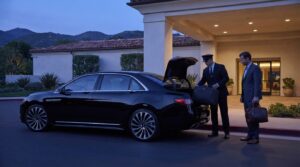
An armored sedan is often the more refined answer for a discreet, tightly scheduled executive program. It delivers a low-profile presence, an elegant rear cabin, and easier positioning at luxury hotels, corporate entrances, restaurants, and private aviation terminals. For a principal who values a composed arrival and typically travels with one or two passengers, a sedan can feel intentional rather than excessive.
An armored SUV brings greater versatility. It generally offers a higher seating position, more interior volume, more room for equipment and luggage, and better utility when a protective team needs to travel close to the principal. It can also be the stronger fit for longer drives, estate transfers, uneven driveways, mountain routes, or multi-stop family travel.
Neither option is automatically superior. The right vehicle is the one that supports the assignment without creating unnecessary attention or compromising comfort.
When an Armored Sedan Is the Better Choice
For many executive movements, discretion is the defining advantage of an armored sedan. A properly selected sedan can blend into a financial district, a studio lot, a private club, or a formal business setting more naturally than a larger platform. It communicates professional stature while avoiding the visual weight that can accompany an SUV.
The rear-seat experience also matters. Premium sedans are designed around executive comfort, with quieter cabins, refined seating, climate control, and an atmosphere suited to calls, preparation, or decompression between appointments. When the schedule involves airport transportation, investor meetings, diplomatic-style events, or high-level corporate travel, that environment can be a meaningful benefit.
A sedan may also be easier to maneuver in dense urban areas. In Los Angeles, New York, San Francisco, and other congested markets, shorter overall dimensions can make hotel approaches, underground garages, valet lanes, and narrow loading zones less complicated. That said, armored modifications add considerable weight. The vehicle’s handling, braking, turning characteristics, and operating requirements must be understood by a trained chauffeur, regardless of body style.
The trade-off is space. A sedan is less accommodating when several passengers, substantial luggage, protective personnel, or specialized equipment must travel together. If the day calls for flexibility beyond a principal and a close companion, a sedan can become restrictive quickly.
When an Armored SUV Makes More Sense
An armored SUV is often the preferred platform for family security, executive teams, and more complex movement plans. Its utility becomes apparent the moment the itinerary includes multiple passengers, airport luggage, children’s items, medical necessities, communications equipment, or advance and protective personnel.
The elevated driving position may offer the chauffeur improved visibility in traffic, while the larger cabin gives passengers room to enter, exit, and settle in with greater ease. For long transfers between Southern California destinations such as Malibu, Calabasas, Thousand Oaks, or Orange County, that additional space can make a demanding day feel considerably more comfortable.
SUVs are also practical for residences with steep approaches, properties with longer private drives, and destinations where road conditions are less predictable. However, size is not an automatic advantage. A larger armored vehicle can be harder to park, more conspicuous in certain settings, and more challenging to maneuver around crowded venues. It may also attract interest precisely because it looks substantial.
For that reason, the most effective SUV program balances capability with restraint. A vehicle should support the protective objective while remaining appropriate for the principal’s public profile, usual travel patterns, and preferred level of visibility.
Protection Is More Than Ballistic Material
Clients often focus first on armor ratings, ballistic glass, and reinforced components. Those details matter, but they are only part of the equation. The protection level should be matched to a qualified assessment of the anticipated risk, the vehicle’s certified configuration, and local operating conditions.
Weight from armor can change acceleration, braking distance, suspension behavior, tire requirements, and fuel consumption. It can also reduce usable cabin or cargo space depending on the build. A high-quality armored vehicle should be maintained by specialists familiar with its particular protective systems, not treated like a standard luxury fleet vehicle.
Operational discipline is equally essential. Chauffeurs and security professionals need to know the vehicle’s dimensions, performance limits, emergency procedures, communications protocol, and planned routes. They also need the judgment to keep a journey calm and unobtrusive. The best secure transportation feels polished and uneventful because the preparation was thorough.
Consider the Arrival Profile
For public-facing executives, entertainment professionals, and high-net-worth families, the image projected at arrival deserves careful thought. An armored sedan is usually the quieter choice. It fits naturally outside corporate offices, private clubs, luxury restaurants, and formal events where understated authority is preferable.
An SUV can signal greater capability and may be entirely appropriate for estate security coordination, family movement, or travel with a close protection detail. Yet in a highly visible environment, its size can make the security posture more apparent. Sometimes that is desirable. Sometimes it is not.
This is where a personalized approach matters. The same principal may require a sedan for weekday executive travel and an SUV for weekend family movement, airport departures, or travel involving multiple staff members. Security transportation does not need to be one-size-fits-all to be consistent.
Comfort, Capacity, and Daily Practicality
The decision often becomes clear when the trip is viewed from the passenger’s perspective. A sedan excels when the rear cabin is primarily a private workspace. It offers a more intimate environment for confidential calls and focused travel between short, high-priority appointments.
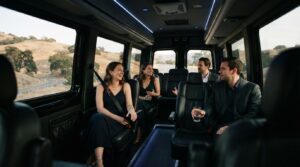
An SUV excels when the cabin must serve several functions at once. It can carry additional passengers without crowding, accommodate more luggage, and provide more flexibility for a changing schedule. It is particularly useful when a family, assistant, or executive security professional must remain close throughout the day.
There is also a financial consideration. Armored SUVs commonly require more fuel, may involve higher operating costs, and can demand more specialized maintenance due to their size and weight. A sedan can be the more efficient choice when its capacity is sufficient. Premium service is not about choosing the largest vehicle. It is about selecting the right resource with precision.
Build a Vehicle Plan Around Real Life
A thoughtful secure transportation program starts with a confidential discussion of routine and exceptions. Consider who travels, where they go, how often plans change, what luggage or equipment is involved, whether children or staff accompany the principal, and how visible the security posture should be. Also consider the destination environment: a corporate campus, an estate, a hotel driveway, an airport terminal, and a private event venue all create different operational demands.
LuxPro® USA approaches these movements as a white-glove coordination assignment, pairing executive transportation with the discretion, vetted personnel, and planning standards expected by discerning clients. Where appropriate, secure vehicle travel can be aligned with close protection, airport logistics, estate support, and other concierge requirements under one carefully managed plan.
The most reassuring armored vehicle is rarely the one that draws the most attention. It is the one that arrives prepared, fits the moment, protects the people inside, and allows the day to proceed exactly as it should.