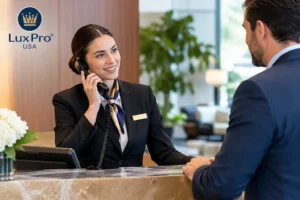


A residence can be architecturally extraordinary and still feel disorganized when no one owns the details. Estate staffing examples make the difference clear: the right professionals do more than complete tasks. They preserve privacy, anticipate the household’s rhythm, protect the property, and ensure every arrival, meal, event, and departure is handled to exacting standards.
For a principal with multiple homes, frequent travel, children, guests, or a public-facing career, staffing is not simply a matter of hiring more people. It is about assigning clear responsibility, establishing discreet communication, and building a team that reflects the household’s expectations. The ideal structure depends on the estate, the family, and how the property is used.
Estate Staffing Examples by Household Need
A large coastal residence used for weekend entertaining requires a different team than a primary family estate in Calabasas or Malibu. Likewise, a principal who travels internationally every month has priorities that differ from an owner who hosts board meetings and philanthropic events at home.
Example 1: The Executive Primary Residence
Consider an executive couple with a substantial primary residence, demanding work schedules, and regular domestic and international travel. Their estate team may be led by an estate manager or house manager who oversees maintenance, vendors, household calendars, inventory, and staff scheduling.
A private chef may prepare daily meals around dietary preferences and changing schedules, while a housekeeper maintains guest-ready interiors without disrupting the family’s workday. A professional chauffeur can manage airport transfers, school transportation, meetings, and evening engagements with the discretion expected by high-profile clients.
For this household, the estate manager is the operational center. Rather than requiring the principals to approve every repair, delivery, or service appointment, the manager presents only the decisions that require their attention. That creates the real luxury: time and mental space.
Example 2: The Entertainment and Hosting Estate
An estate that regularly welcomes guests needs a team with hospitality instincts. A house manager may coordinate guest arrivals, floral arrangements, special requests, room readiness, and post-event restoration. A chef or event culinary team can support intimate dinners one evening and larger celebrations the next.
In this setting, a butler or formal service professional can be valuable, especially when the owner prefers polished table service, detailed wardrobe care, luggage handling, and a familiar point of contact for guests. The role should not be selected purely for appearance. The strongest candidates combine refined service standards with sound judgment and a calm, low-profile manner.
A dedicated event coordinator is not always necessary as a full-time hire. Many estates benefit more from an estate manager who can direct trusted outside partners as needed. This approach controls fixed staffing costs while still delivering a highly personalized guest experience.
Example 3: The Family Estate With Children
For a busy family, the staffing plan often centers on consistency. A family assistant or nanny may manage school schedules, activities, travel packing, appointments, and age-appropriate household routines. Depending on the children’s needs, that role may be distinct from a personal assistant, who focuses on the principals’ calendar, correspondence, reservations, gifts, and private errands.
Housekeeping is often structured around daily maintenance rather than occasional deep cleaning. A family estate sees constant movement: pets, homework, sports equipment, visitors, meal preparation, and seasonal changes. Staff need to understand which areas are private, when to step in, and when to remain invisible.
Security also deserves special consideration. Estate security personnel can manage access points, monitor perimeter concerns, accompany family members when appropriate, and coordinate with residential security systems. The objective is not to make the home feel restrictive. It is to provide a quiet layer of protection that allows the family to live normally.
Example 4: The Multi-Property Household
Owners with residences in Southern California, the Bay Area, New York, London, or other destinations face a different challenge: consistency across locations. A chief of staff, estate manager, or family office liaison may coordinate household standards, vendor records, maintenance schedules, art and furnishings inventories, and seasonal openings or closings.
Each property may have local staff, but the principals should receive the same level of readiness everywhere. Linens are refreshed, vehicles are serviced, refrigerators are stocked to preference, security protocols are confirmed, and personal items are prepared before arrival. The operational work happens well before a private flight lands or a chauffeur arrives at the airport.
In this model, centralized communication matters as much as individual talent. Without it, separate households can become separate systems, each with different vendors, inconsistent purchasing, and unclear accountability.
The Core Roles in a High-Performing Estate Team
The most effective estate staffing examples are not necessarily the largest. A lean team of exceptional professionals often outperforms an oversized staff with overlapping duties. Each role should have a precise scope, reporting structure, and understanding of the family’s service preferences.
An estate manager handles property operations, budgets, staffing, maintenance, vendors, and long-term planning. A house manager is typically more focused on the daily household, including housekeeping standards, deliveries, supplies, guest preparation, and routine scheduling. In a smaller household, one highly capable professional may fulfill both functions.
A personal assistant manages the principal’s personal life, while an executive assistant generally supports professional responsibilities. Some clients need both. Combining the roles can work when the pace is manageable, but it can create pressure and missed details when business travel, family logistics, and social obligations all intensify at once.
Private chefs, housekeepers, chauffeurs, security personnel, nannies, groundskeepers, and caretakers round out the team based on the property and lifestyle. The key is to avoid vague job descriptions. “Help with whatever is needed” can sound flexible, but it often produces confusion, role conflicts, and turnover.
Where Staffing Plans Commonly Fall Short
A frequent mistake is hiring for a single immediate need without considering the full household operation. For example, a client may hire a housekeeper when the actual problem is a lack of coordination among vendors, deliveries, repairs, and guest schedules. In that case, a house manager may offer greater value, even if housekeeping support remains necessary.
Another issue is underestimating the importance of screening. Estate staff have access to private spaces, family routines, financial information, travel plans, and sometimes children. Experience is essential, but references, background screening, confidentiality expectations, and professional judgment are equally critical.
Compensation and coverage also require candor. A single household employee cannot be available around the clock without relief, boundaries, or an agreed on on-call structure. For estates requiring 24/7 readiness, a rotating team or coordinated concierge support is more sustainable and more respectful of staff.
Building an Estate Team With Discretion
The best staffing decisions begin with an honest review of how the household operates. How often is the property occupied? Is the home used for formal entertaining? Are there children, pets, frequent travelers, or public figures? Does the owner want staff to be highly visible and service-oriented, or nearly invisible except when needed?
From there, define the nonnegotiables. For some households, culinary excellence is central. For others, it is advanced security awareness, meticulous organization, experience with fine art and luxury assets, or the ability to coordinate complex travel and events. Technical competence matters, but cultural fit matters just as much. A candidate can have an impressive résumé and still be wrong for a quiet, privacy-first household.
LuxPro® USA supports clients who need estate-level coordination alongside executive transportation, security, private travel, and lifestyle assistance. When these services work together, the household has one accountable standard of care rather than a patchwork of unrelated providers.
The right estate team should make an exceptional home feel easier to enjoy. When every professional understands the standard, protects confidentiality, and handles details before they become disruptions, the principal is free to focus on family, business, and the moments that deserve their full attention.