
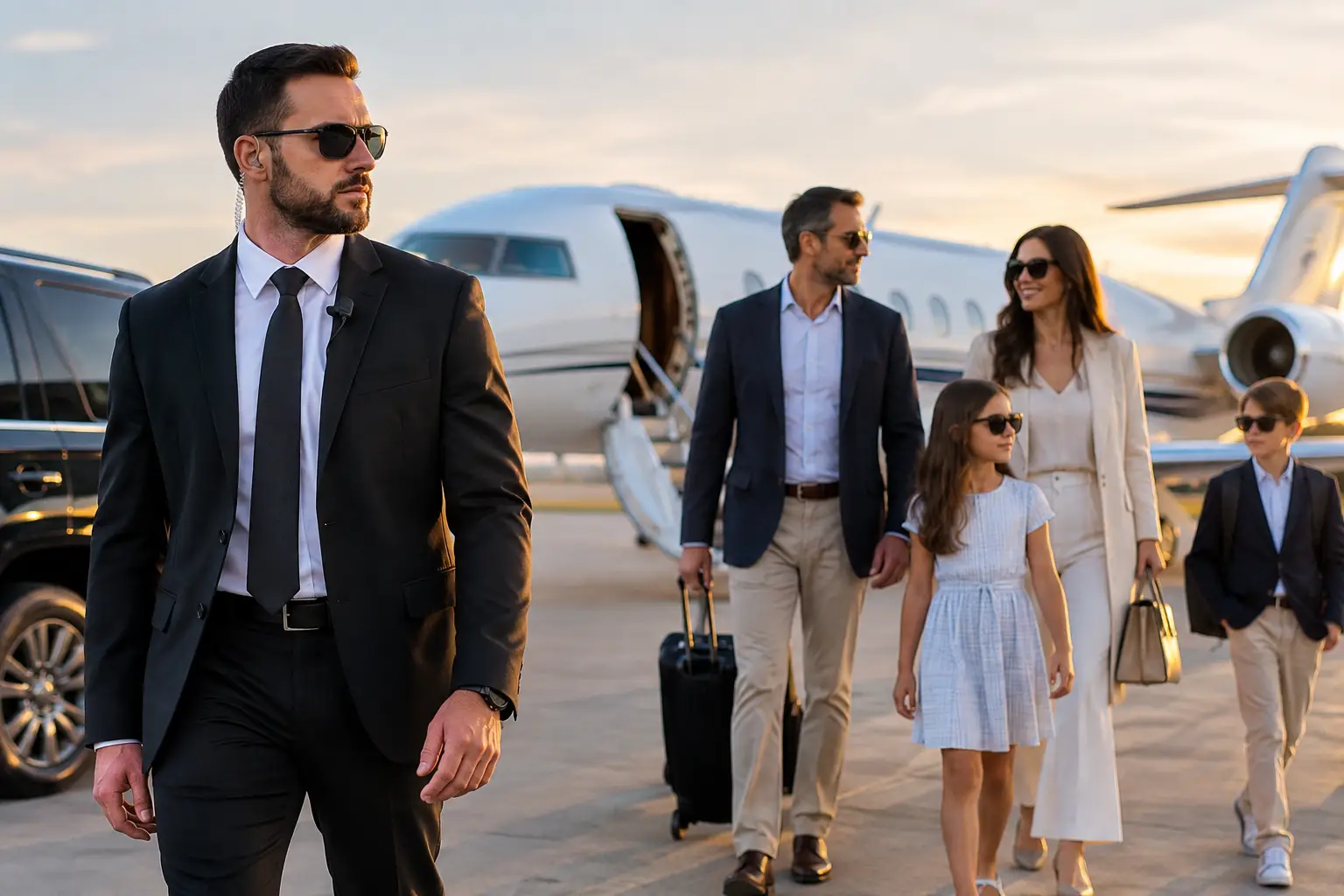
A delayed flight at LAX is inconvenient. A delayed flight with an exposed executive, a visible family routine, or an unvetted driver waiting curbside can become a much larger concern. Effective travel security is not about making every trip feel restrictive. It is about creating the quiet confidence that every movement, handoff, and contingency has already been considered.
For executives, entertainment professionals, high-net-worth families, and corporate teams, secure travel begins long before departure. It is built through advance intelligence, professionally screened personnel, discreet transportation, and a single point of coordination that keeps details private while plans remain flexible.
Travel Security Starts Before the Reservation
The most valuable security decisions happen before an itinerary is finalized. A travel plan should account for more than flight times and hotel preferences. Consider who is traveling, how recognizable they are, whether they are carrying sensitive information or high-value items, and how much visibility their schedule may create.
A routine business trip may require only an experienced chauffeur, confirmed pickup instructions, and reliable flight monitoring. A higher-profile movement may call for a more tailored approach: private aviation coordination, secure arrival and departure routes, executive protection, luggage handling, and advance communication with the destination team.
The appropriate level of protection depends on the traveler, destination, schedule, and current circumstances. Overbuilding a security plan can feel intrusive and inefficient. Underplanning can leave clients relying on unfamiliar vendors, public waiting areas, or improvised transportation when time and privacy matter most. The goal is proportionate protection delivered with polish.
Build an itinerary around controlled transitions
Airports, hotel entrances, event venues, marinas, and private residences are the points where plans often become exposed. Each transition should be clear: who is meeting the traveler, where the handoff occurs, how identification is confirmed, and what happens if the schedule changes.
This is especially important for arrivals. A guest should not be searching through a crowded terminal for a vehicle or exchanging sensitive travel details with an unknown dispatcher. A vetted chauffeur or security professional should have precise instructions, verified client information, and a discreet communication method before the traveler lands.
For families, the same principle applies to children, caregivers, and household staff. When every person understands the pickup protocol and knows whom to contact, a busy travel day remains calm rather than chaotic.
Choose People, Not Just Transportation
A luxury vehicle alone does not create a secure travel experience. The people behind the service determine whether a trip feels controlled, private, and genuinely well managed.
Professional chauffeurs should be selected for more than driving skill. They need sound judgment, local knowledge, discretion, defensive driving ability, and the confidence to adapt without creating unnecessary attention. They should know when to take the most efficient route, when to avoid a congested or exposed area, and when to communicate an issue immediately.
The same standard applies to executive protection personnel. A highly visible detail may be appropriate for certain public appearances, major events, or elevated-risk travel. In many cases, however, a low-profile professional who integrates naturally into the schedule offers better protection and a more comfortable experience. Security should support the client’s presence, not overwhelm it.
Before any provider is confirmed, ask practical questions about screening, licensing, insurance, training, communications, and escalation procedures. A polished presentation matters, but it should be backed by operational discipline.
Secure the Information Around the Trip
Travel plans can reveal more than clients realize. Flight numbers, hotel names, restaurant reservations, event credentials, and social posts can collectively create a detailed picture of where someone will be and when. For an executive or prominent family, that information deserves thoughtful handling.
Share only what each service partner needs to perform their role. A driver may need an arrival time and pickup location but not a complete day-by-day itinerary. A venue liaison may need guest names but not residential details. Limiting unnecessary access reduces exposure without slowing the experience.
Use designated contacts for itinerary changes, particularly when assistants, family offices, corporate travel departments, and multiple vendors are involved. A single, trusted coordinator prevents conflicting instructions and keeps last-minute adjustments from spreading through an oversized group chat.
Discretion also extends to personal behavior. Avoid posting real-time locations on social media, especially when traveling with children or when a residence will be vacant. Photos can wait until after departure. That small delay is often one of the simplest and most effective privacy measures available.
Plan for the Moments That Do Not Go as Scheduled
The best travel security plans are not tested by the ideal itinerary. They are tested by cancellations, traffic closures, weather, late-night diversions, medical concerns, and unexpected changes to a public schedule.
A quality provider anticipates these moments with live flight tracking, alternate vehicle availability, route options, and round-the-clock communication. If a commercial flight is diverted, the response should not begin with a client calling several companies to find a ride. The team should already be assessing the revised arrival point, driver hours, ground conditions, and the next secure step.
For high-priority movements, contingency planning may include a secondary vehicle, alternate airport access, backup accommodations, or private flight options. These measures are not necessary for every trip, but they can be decisive when an executive must arrive for a board meeting, a family needs to leave an area quickly, or an event schedule changes with little notice.
There is a cost to redundancy, and not every itinerary needs it. The right question is not whether a backup is luxurious. It is whether the consequences of a disruption justify the preparation.
Travel Security for Events and Multi-City Schedules
Security becomes more complex when travel is tied to a wedding, investor meeting, film production, yacht charter, roadshow, or large corporate event. Multiple guests may arrive at different times. Equipment, gifts, documents, or wardrobe may need separate handling. The itinerary can change by the hour.
In these situations, centralized coordination is more than a convenience. It is a security advantage. One trusted team can align chauffeured transportation, executive protection, personal assistance, and special logistics without requiring the client to brief separate vendors repeatedly.
For a multi-city schedule, consistency matters as much as local expertise. Travelers should receive the same standard of communication and professionalism in Los Angeles, New York, the San Francisco Bay Area, or London. Local teams need destination knowledge, while the lead coordinator maintains the complete picture of the journey.
LuxPro® USA approaches this work as a coordinated VIP service, pairing white-glove travel arrangements with vetted transportation and security support designed around each client’s privacy, schedule, and personal expectations.
Know When to Elevate Protection
Certain situations warrant a more deliberate review of the security plan. These include a publicized appearance, a contentious business matter, travel with valuable assets, an unfamiliar destination, a high-conflict family situation, or a sudden increase in unwanted attention.
Elevating protection does not automatically mean adding a conspicuous security detail. It may mean changing airport procedures, securing a more private vehicle, adjusting the hotel arrival process, using a trained advance professional, or simply reducing the number of people who receive the itinerary.
Clients should feel comfortable discussing these factors with a trusted provider. The conversation should be confidential, direct, and free of theatrics. Good security planning recognizes risk without turning every trip into a spectacle.
The Standard Is Calm, Not Visible
The finest travel security is often nearly invisible to the traveler. The vehicle is ready before it is needed. The driver knows the preferred route and the alternate route. The right professional is present at the right moment, while private details remain private.
That standard allows executives to focus on the meeting ahead, families to enjoy the journey, and hosts to welcome guests with confidence. When travel is planned with discretion and care, security does not take away from the experience. It gives clients the freedom to move through the world on their own terms.