

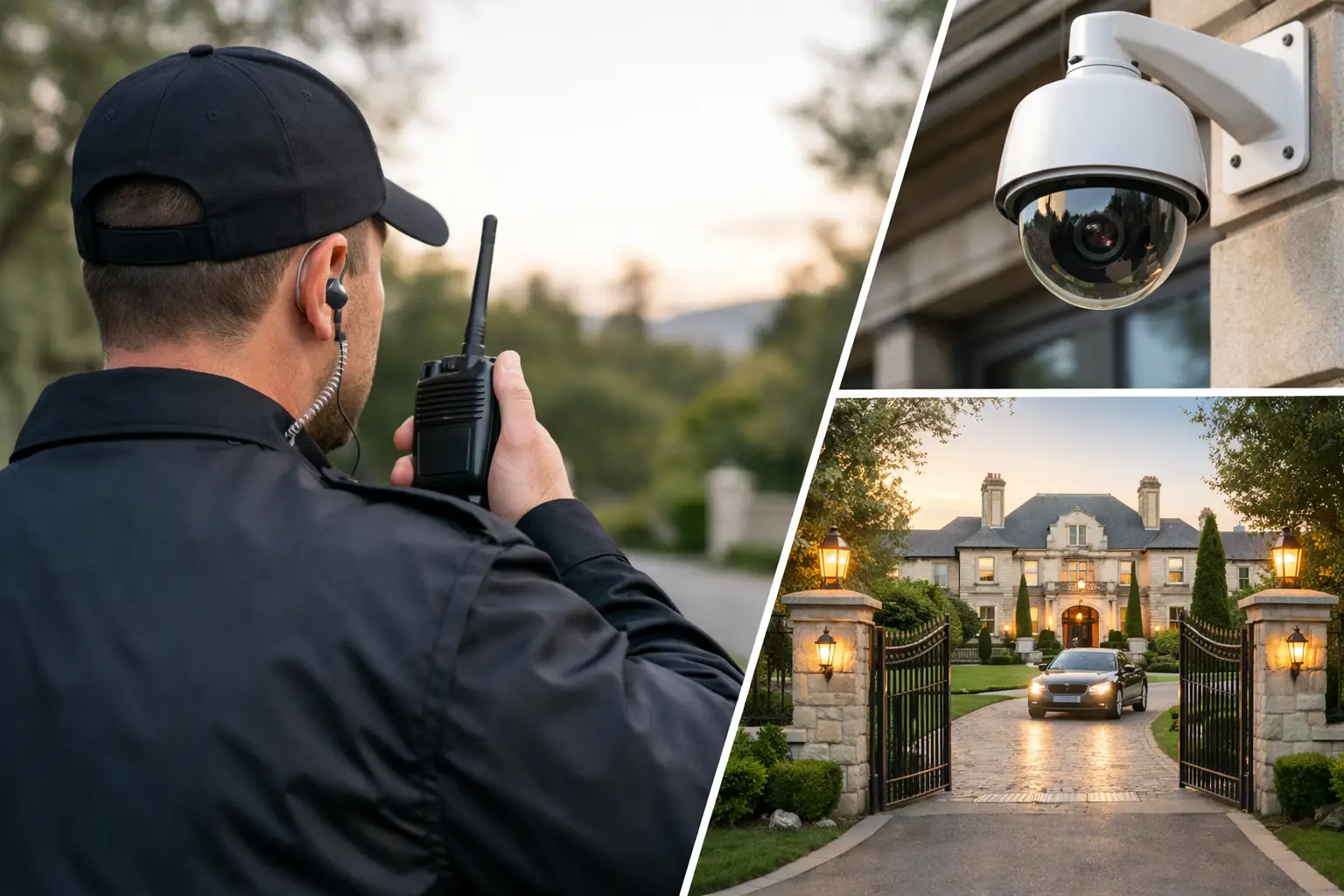
A gated driveway and camera system can make an estate feel protected, but they do not always tell the full story. When do estates need security? Usually, the answer is not tied to the size of the home alone. It comes down to visibility, routines, access, assets, and the people who depend on the property remaining private and well managed.
For a high-net-worth family, executive, public figure, or seasonal resident, estate security is not about making a residence feel unwelcoming. It is about creating a discreet layer of control around daily life. The right plan protects the household while preserving the comfort, hospitality, and freedom that make an estate worth having.
When Do Estates Need Security Beyond Alarms?
Most estates benefit from thoughtful physical security planning, even when there has never been a direct threat. An alarm may alert someone after a door is opened. A camera may record activity at a gate. Neither necessarily confirms who is arriving, notices an unfamiliar pattern before an incident, or manages a difficult visitor at the right moment.
Professional estate security becomes especially valuable when the property has multiple entrances, guest houses, staff quarters, extensive grounds, or frequent service traffic. Larger homes often have more than one point of access, more people coming and going, and more opportunities for a simple oversight to become a privacy or safety concern.
The need can also change quickly. A household that felt perfectly comfortable with remote monitoring may need a visible or low-profile protective presence after a public business event, a family milestone, a contentious legal matter, media attention, or a change in travel habits. Security should be able to scale with the moment rather than force the household into a permanent, one-size-fits-all arrangement.
The Signs an Estate Needs a Security Detail
A well-run estate is often active. Housekeepers, landscapers, chefs, contractors, delivery personnel, caregivers, guests, and household managers may all have legitimate reasons to enter. The question is whether access is organized, verified, and supervised appropriately.
One of the clearest signs is a high volume of unfamiliar or changing visitors. Renovations, landscape projects, art installations, move-ins, and major repairs can bring outside crews onto the property for days or months. A security professional can verify arrivals, maintain an access record, direct vendors away from private areas, and help ensure that work proceeds without exposing the household’s routines.
Another signal is a predictable schedule. If a principal leaves for the office at the same time each morning, children have regular activities, or the home is vacant during known periods, that consistency can create avoidable exposure. A security plan may adjust patrol timing, coordinate secure departures and arrivals, and identify routine patterns that should not be obvious from the street.
Other circumstances deserve a closer assessment:
- The estate contains valuable art, jewelry, collections, vehicles, wine, or sensitive business materials.
- Family members have a public profile, leadership role, entertainment career, or heightened online visibility.
- The household receives unwanted contact, suspicious deliveries, repeated trespassing, or concerning attention near the residence.
- The property is used for events, executive meetings, fundraisers, or overnight guests.
- The owners travel frequently, maintain multiple residences, or leave the home unoccupied for extended periods.
No single factor automatically calls for a full-time detail. Yet when several factors overlap, relying solely on locks, cameras, and a neighborhood patrol may leave meaningful gaps.
Privacy Is Often the First Concern
Many estate owners seek security because privacy has become harder to maintain, not because they expect a dramatic incident. A contractor taking unauthorized photos, a visitor who learns too much about a family’s schedule, or a driver entering through an unmonitored service gate can create discomfort and risk.
Discreet estate protection establishes clear boundaries. It can include visitor screening, gatehouse coverage, confidential handling of deliveries, controlled access to private wings, and coordination with trusted household staff. The goal is not to scrutinize every guest. It is to make sure the people entering the property have a legitimate reason to be there and remain within the areas appropriate to their visit.
Travel and Vacant Periods Change the Equation
A residence can appear occupied while its owners are away, but appearance is only one part of protection. Extended travel introduces practical concerns: package accumulation, vendor access, alarm response, weather-related damage, unexpected maintenance, and the possibility that someone may test whether the property is empty.
Estate security during travel should connect with estate management rather than operate separately. The team needs to know which staff are authorized, which maintenance work is scheduled, what vehicles should move, and how emergencies will be handled. For clients with homes in Malibu, Calabasas, Westlake Village, or other high-profile residential markets, that level of coordination can be particularly useful during seasonal occupancy changes or periods of elevated wildfire and weather awareness.
Security for Events Without Disrupting Hospitality
Private celebrations and business gatherings can transform a familiar home into a busy venue. Valet activity, catering deliveries, temporary staff, performers, photographers, and invited guests can create a large perimeter in a short period of time. Even an intimate event may require advance coordination if the guest list includes prominent individuals or the property has limited parking and access points.
The best event security is felt more than seen. It begins before the first guest arrives, with route planning, credentialing where appropriate, vendor arrival windows, parking coordination, and a clear response plan. During the event, personnel can manage entry points, observe the grounds, assist with departures, and address unexpected visitors without drawing attention away from the host.
There is a trade-off. An overly visible security posture can feel out of place at a family dinner or elegant celebration. Too little structure can burden the host and household staff. The appropriate approach depends on the event size, guest profile, location, media interest, and the principal’s preference for a visible deterrent or a more understated presence.
What a Thoughtful Estate Security Plan Includes
Estate security should be designed around the way a household actually lives. A family with young children, a CEO who hosts executive meetings at home, and a collector with a seasonal residence will have very different needs.
A professional assessment normally begins with the property itself: gates, fencing, lighting, cameras, landscaping, sightlines, driveways, service entrances, and emergency access. It should also consider operations. Who has keys or codes? How are visitors announced? Which vendors are recurring? Where do deliveries wait? What happens when an alarm activates at 2:00 a.m.?
From there, the plan may combine on-site personnel with technology and protocols. Depending on the estate, that can mean gate coverage, mobile patrols, executive protection during arrivals and departures, monitoring of service access, residential security driving, or coordinated response procedures. Security personnel should be carefully vetted, trained to communicate professionally, and capable of working respectfully alongside estate managers, domestic staff, chauffeurs, and personal assistants.
LuxPro® USA approaches estate protection as part of a larger white-glove service environment. That matters because security personnel may need to coordinate a secure airport departure, manage a vendor arrival, support a private event, or communicate with a household manager without requiring the client to manage separate providers.
Avoiding Common Gaps in Estate Protection
The most common weakness is assuming that equipment alone is the security plan. Cameras are valuable, but they need appropriate placement, active review, maintenance, and a response process. A gate is only as effective as the procedures governing who can open it.
Another gap is granting broad, permanent access for convenience. Long-term vendors and former household staff may retain codes, keys, or familiarity with the property after their role has changed. Periodic access reviews are a practical safeguard, particularly after staffing transitions, construction projects, or changes in family circumstances.
Finally, estate security should not exist in isolation from everyday logistics. Chauffeurs, executive assistants, domestic staff, and property managers often notice unusual activity first. When communication is clear, small concerns can be addressed early and professionally rather than becoming urgent problems.
The right time to consider estate security is before the household feels exposed. A discreet assessment can clarify what is already working, where the genuine vulnerabilities are, and how to protect the property without compromising the privacy and effortless hospitality its owners expect.